ChatGPT vs. the AI Powering Your Software
What Shop Owners Need to Know About the Difference
Everyone says AI now.
Your marketing platform says it uses AI. Google says your ads are AI-powered. Your CRM has AI features. Your competitors are talking about AI. And you’ve been using ChatGPT on your phone.
It all gets called the same thing. It’s not.
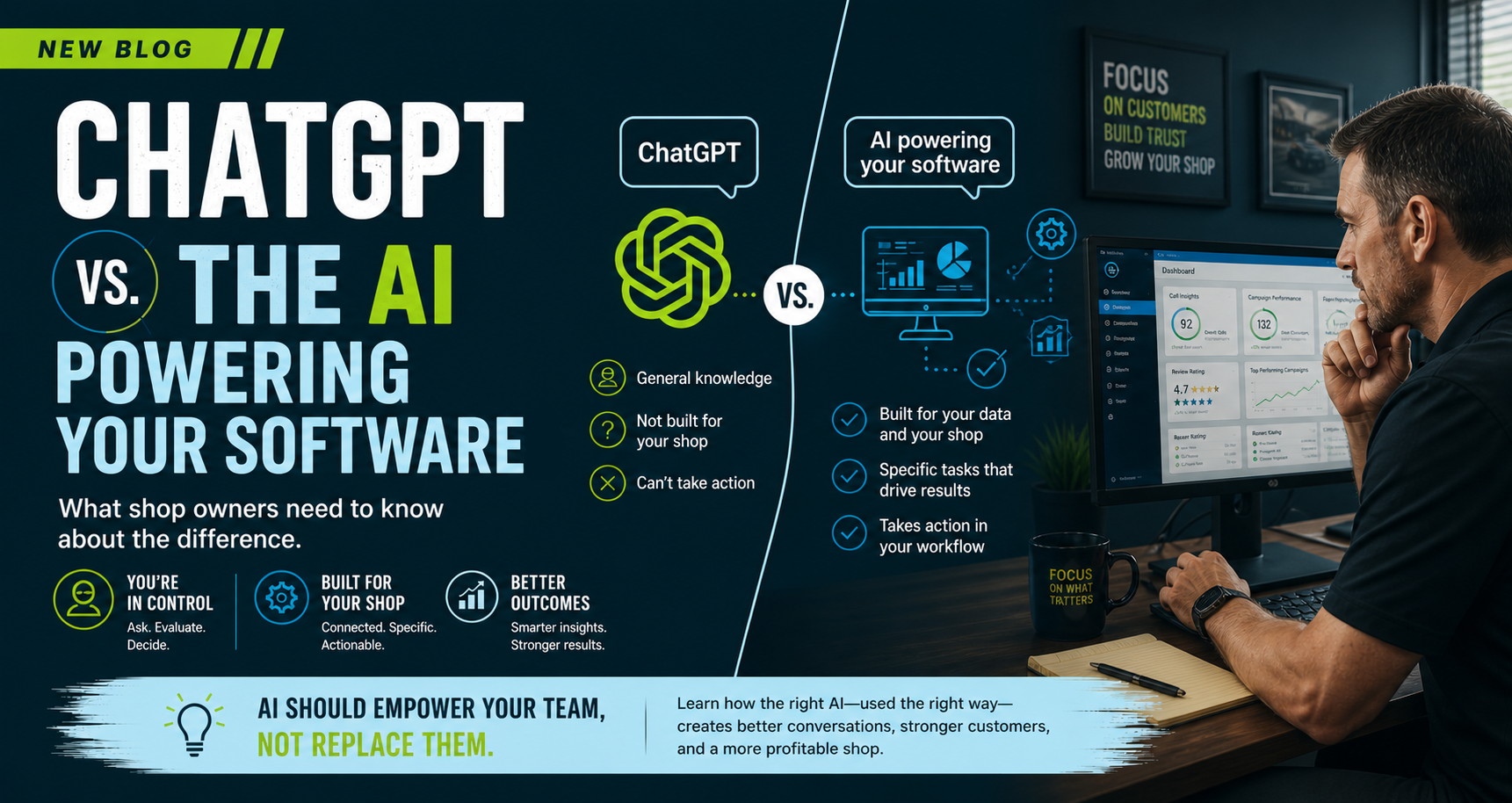
And the most important difference isn’t technical. It’s this: who stays in control? In some setups, AI gives you better information so you can make better decisions. In others, AI makes the decisions for you. Those are fundamentally different relationships with the technology, and they lead to very different outcomes for your business.
The shops that get AI right will be the ones that understand that difference. Let’s break it down.
ChatGPT: You’re Driving
When you open ChatGPT, you’re in the driver’s seat. You ask the questions. You evaluate the answers. You decide what to do with the output.
That’s a good setup. It’s what the first five posts in this series have been about: how to use these tools well, how to evaluate what they give you, and how to spot the places where they get it wrong.
But ChatGPT has limits that matter for your business:
- It doesn’t know who you are. Every conversation starts from zero.
- It doesn’t have access to your data - your CRM, your customer list, your call recordings, your campaign performance. None of it.
- It can’t take action. It can draft an email, but it can’t send it. It can suggest a follow-up, but it can’t trigger one.
ChatGPT is a thinking partner. You control the conversation, you evaluate the results, and you decide what happens next. That’s its strength.
Platform AI: Same Engine, Different Vehicle
When a company builds AI into its platform, it’s using the same underlying AI models (through something called an API) but in a fundamentally different way.
The engine is the same. The vehicle is built for your business:
- It’s connected to your data. Your calls. Your customers. Your campaigns. Your performance history. That context is what makes the output specific and actionable instead of generic.
- It’s built for specific tasks. Not “answer any question.” Score a phone call. Analyze a customer interaction. Draft a review response. Flag a trend.
- It can take action inside your workflow. Trigger alerts, update records, surface insights without you having to copy and paste between tools.
- Your data stays controlled. The company building it controls how data is handled, where it goes, and what the AI can access. That’s a different privacy model than typing customer information into a public chatbot.
This is where the control question gets interesting. Good platform AI still keeps you in control. It surfaces information. It scores calls so your team can coach better. It drafts responses so your people can review and approve. It identifies patterns so you can make better decisions.
The human is still in the loop. The AI just made the loop faster and smarter.
Where Control Gets Lost
Not every implementation of AI keeps the human in the loop. And this is where shop owners need to pay attention.
Fully automated ads. Platforms like Google will happily let their AI manage your ad spend. Automated bidding. Automated keyword selection. Automated everything. It will optimize, but it optimizes for what Google measures, not necessarily for what drives real customers to your shop.
A general-purpose AI doesn’t know that “transmission repair” converts at a completely different rate than “oil change” for your type of shop. It doesn’t know the negative keywords that waste budget in your industry. It hasn’t spent years learning which search terms bring in real repair orders and which ones bring in tire-kickers.
That kind of knowledge is institutional expertise built over years in a specific industry. When a platform combines that expertise with AI, you get optimization that’s tuned for your business. When you let a general-purpose AI run your ads unsupervised, you get whatever the algorithm decides is efficient. Efficient and effective are not the same thing.
AI agents replacing human communication. Some tools promise to handle all customer follow-ups, status updates, and scheduling through AI. The pitch sounds great: fewer staff, more efficiency, less overhead. The reality is often chaotic. Contradictory messages. Wrong appointment times. Customers who feel like they’re being managed by a bot instead of cared for by a person.
The independent auto repair industry is built on trust. Trust is a human thing. AI can support the people who build that trust. It should never replace them.
What This Looks Like Done Right
Here’s the pattern to look for: AI handles the analysis. A human handles the relationship.
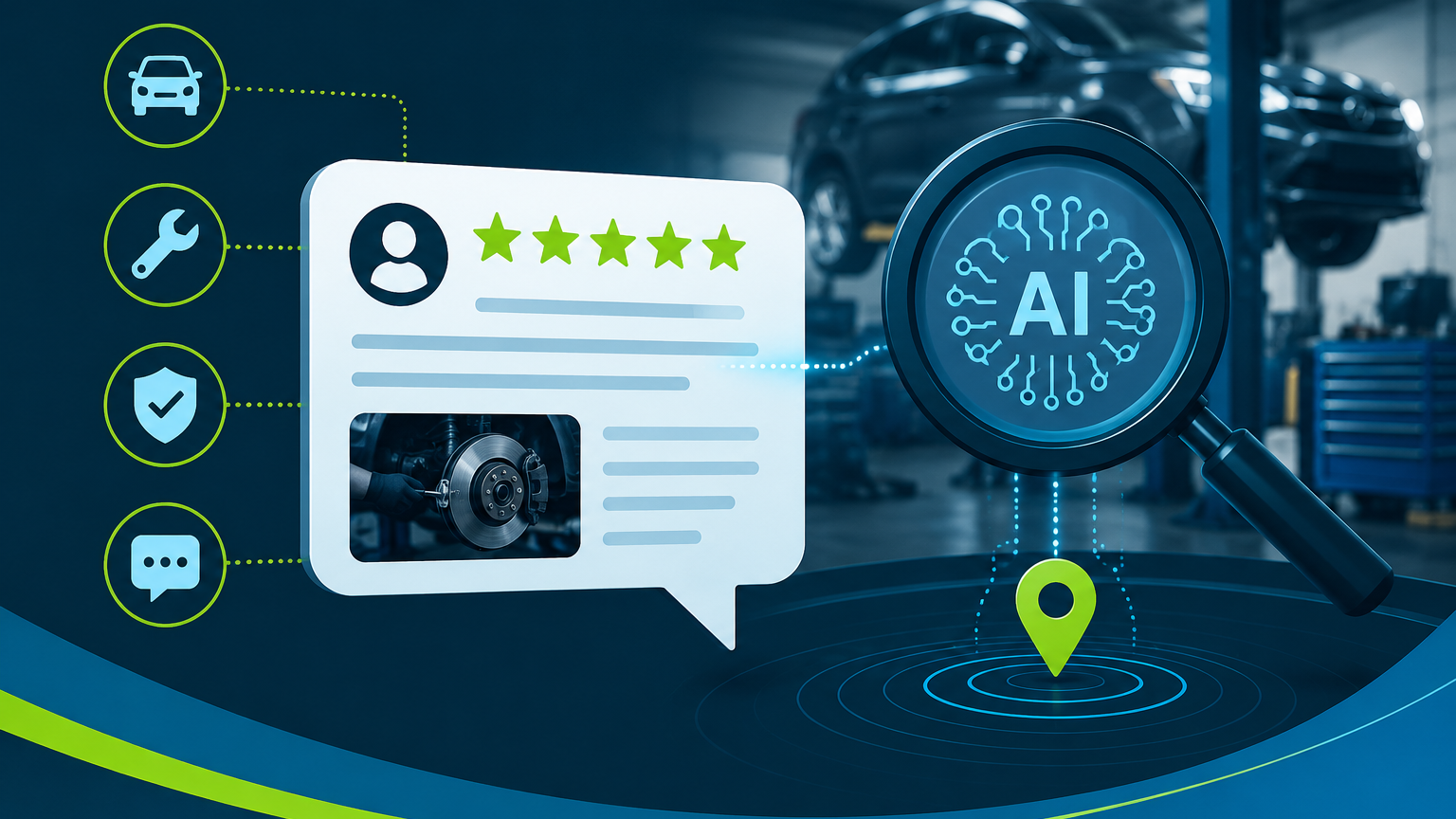
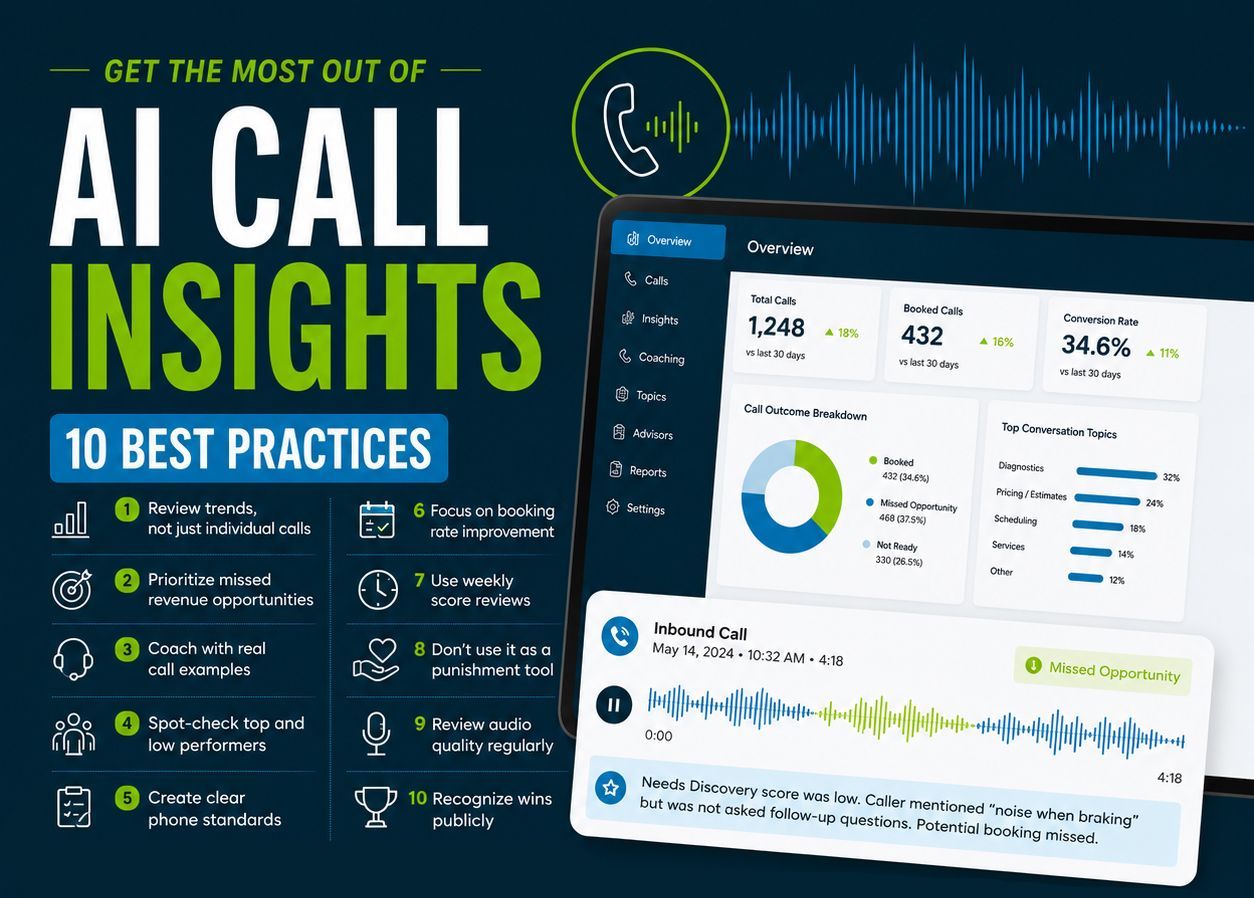
Call insights. AI listens to a call recording, scores the conversation, identifies whether the caller booked. Your service advisor still made the call. Your manager uses the insights to coach the team. The AI didn't replace anyone. It made the humans better at their job. (Shameless plug: we've already built this. KUKUI's AI Call Insights is in beta right now and launching soon.)
Review responses. AI drafts a personalized response to a Google review. Your team reads it, adjusts the tone, and approves it before it posts. The customer gets a thoughtful reply. Your team saved ten minutes. Nobody lost control. (Another shameless plug: this one's live. KUKUI's
AI Review Responder does exactly this inside our platform.)
Customer insights. AI identifies which customers are overdue for service, which declined services have the highest close rate on follow-up, which campaigns are driving real repair orders. Your team decides what to do with that information. The AI surfaced it. The human acts on it.
In every case: AI does the heavy lifting. The human stays in charge.
Questions to Ask When a Vendor Says “We Use AI”
Everyone says it. Not everyone means the same thing. Here’s how to dig deeper:
- Is the AI connected to my actual business data, or is it working from general knowledge?
- What specific tasks does it perform? Can you show me?
- Where does my data go when the AI processes it?
- Does the AI take actions on its own, or does my team stay in control?
- How much of this is your expertise and how much is a third party’s AI running on autopilot?
- How is this different from what I could do myself in ChatGPT?
That last question cuts through the noise fast. If the answer is “it’s basically the same,” that tells you something important.
Both Have a Place
This isn’t ChatGPT vs. platform AI. Both are valuable. They do different things.
Use ChatGPT for:
- Brainstorming and ideation
- Drafting content and communications
- Exploring marketing ideas
- Evaluating your messaging (with the prompts from Post 3)
Expect platform AI for:
- Working with your actual customer data
- Automating tasks inside your workflow
- Generating insights from your real business performance
- Applying industry-specific expertise that general-purpose AI doesn’t have
The thread that connects them: in both cases, the human should be making the final call. The tool that takes the decision away from you isn’t serving you. It’s replacing you.
What’s Next
The AI landscape is shifting fast. In the next post, we’re going to flip the perspective: your customers are using AI too. Google AI Overviews, ChatGPT search, voice assistants. How people find and choose a repair shop is changing. We’ll break down what that means for your visibility.
Catch up on the series:Post 1 • Post 2 • Post 3 • Post 4 • Post 5 • Post 6 • Post 7 • Post 8
For the full framework: The Shop Owner’s Guide to AI in Marketing.
Heather Myers is the Chief Technology Officer at KUKUI, where she builds marketing and customer engagement technology for independent auto repair shops. Before joining the automotive technology space, she built information systems for public and academic libraries.
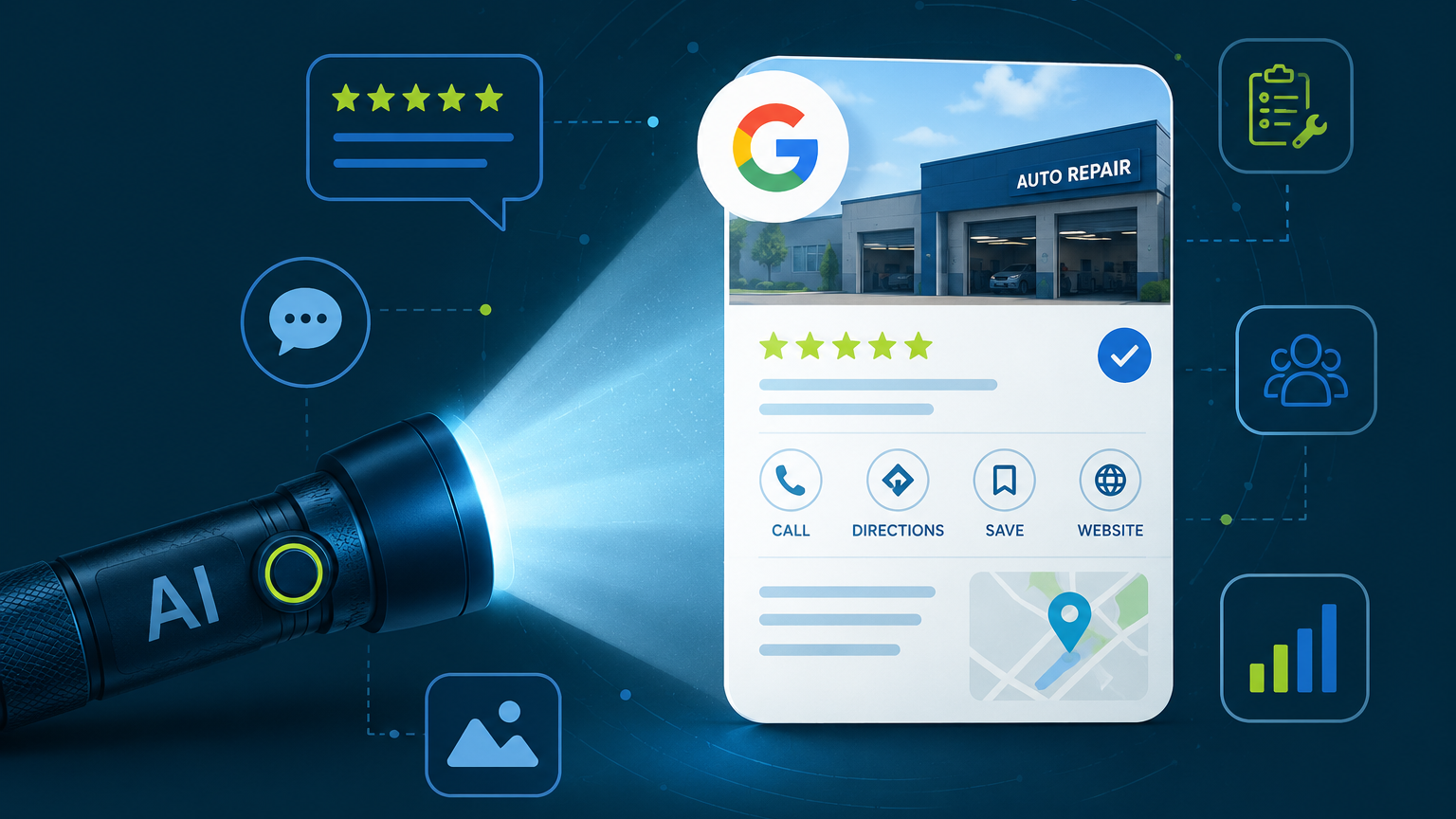
This is the sixth post in our ongoing series, AI Is a Flashlight, Not a Map. New posts publish every two weeks.
Categories
Archives