The Impact of Customer Reviews on AI Visibility for Auto Repair Shops
June 9, 2026
KUKUI Administrator
Why detailed customer reviews are becoming one of the most important signals for AI-powered search and local business recommendations.
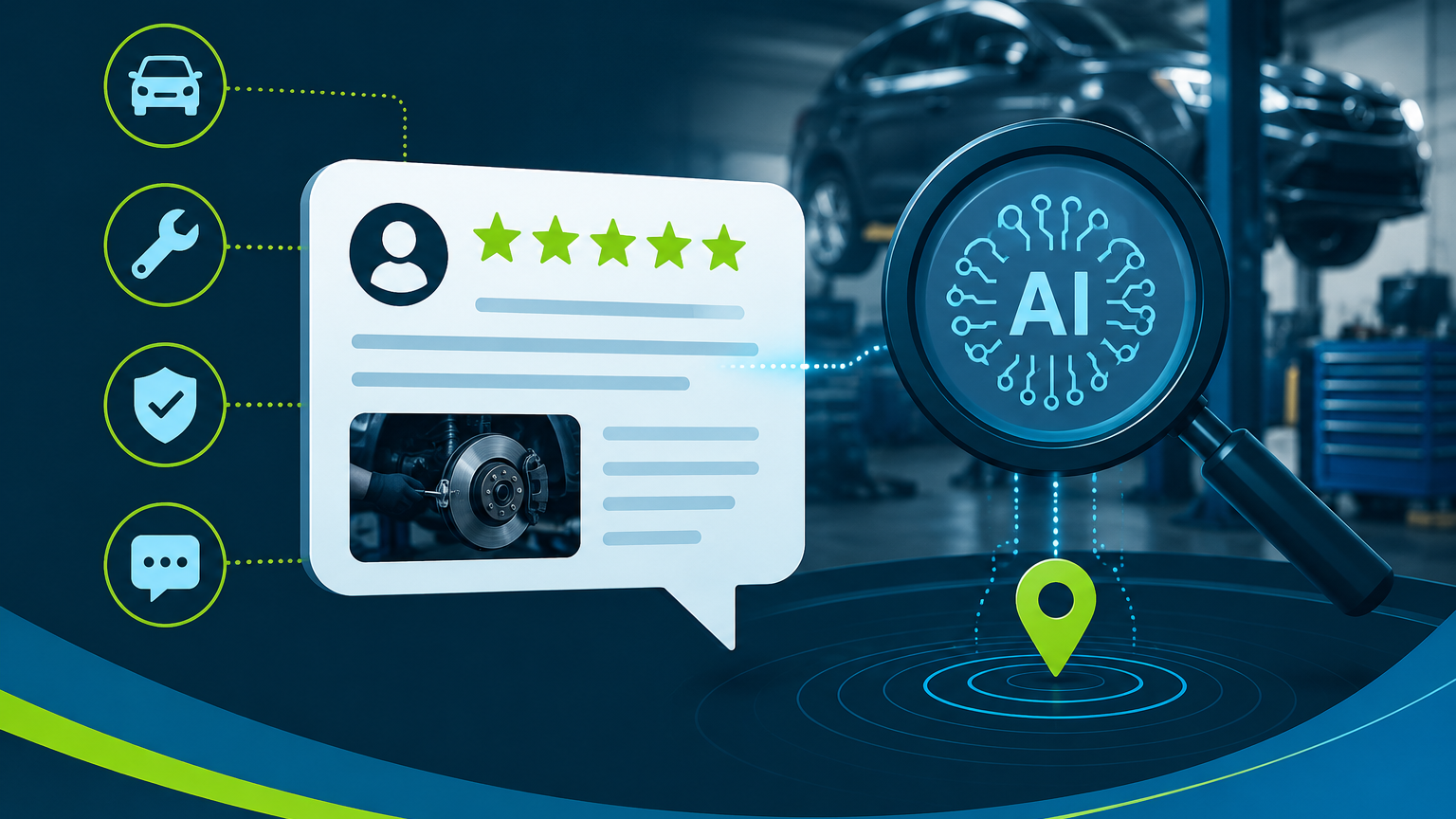
For years, online reviews have helped auto repair shops build trust with potential customers. A strong Google review profile could help your shop stand out in local search, earn more clicks, and give drivers confidence before they ever pick up the phone.
Now, reviews are doing something even bigger.
As ChatGPT, Gemini, Claude, and other AI-powered search tools become part of how customers find local businesses, the words inside your reviews can influence how AI understands, describes, and recommends your shop.
In other words, reviews are no longer just reputation signals. They are training signals, context signals, and visibility signals. For auto repair shops, that means the content of a customer review matters.
AI Search Is Looking for More Than a Star Rating
A five-star review is valuable. But a five-star review that says, “Great service!” does not tell AI very much.
A detailed review, on the other hand, gives search engines and AI tools specific information they can use to understand what your shop is known for.
For example, compare these two reviews:
- “Great shop. Highly recommend.”
Now compare that to:
- “I brought my Toyota Tacoma in for a brake inspection and oil leak diagnosis. The team explained the repair clearly, sent photos of the issue, and had everything done the same day. Honest pricing and great communication.”
Both are positive. But the second review gives AI far more useful context.
It mentions:
- Vehicle type: Toyota Tacoma
- Service: brake inspection
- Repair concern: oil leak diagnosis
- Trust signals: honest pricing, great communication
That kind of detail helps AI-powered discovery tools connect your shop with searches like “Toyota repair near me,” “brake inspection,” “oil leak mechanic,” or “honest auto repair shop.”
Google has said local rankings are based on relevance, distance, and prominence, and review count and review score can factor into prominence. Google also notes that complete, accurate business information helps it better understand and match businesses to searches.
Why Review Content Matters for AI Visibility
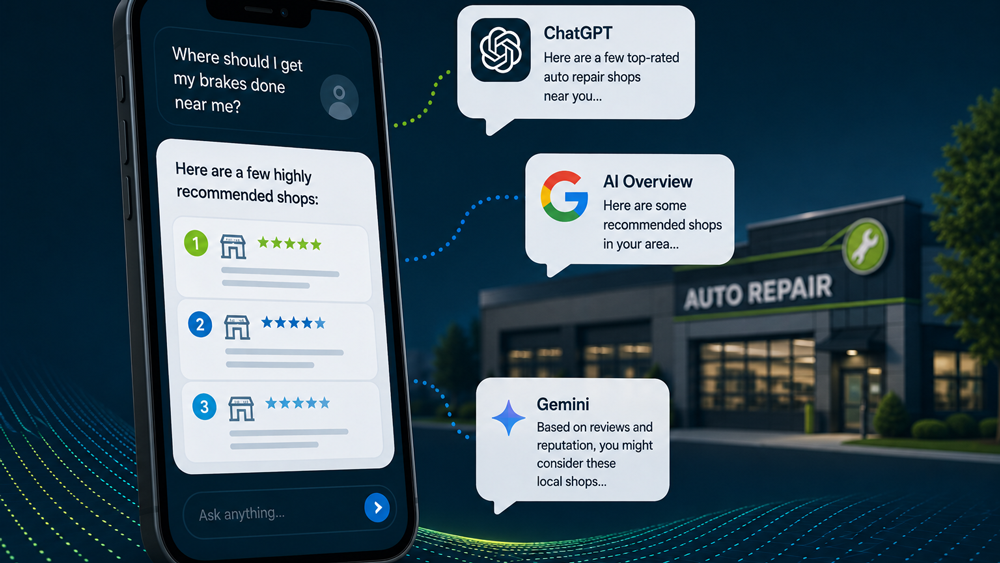
AI tools are created to summarize, compare, and recommend. Instead of simply showing a list of blue links or map results, AI search experiences often generate an answer.
A customer might ask:
- “Who is the best BMW mechanic near me?”
- “Find an honest auto repair shop that works on Subarus.”
- “What shop near me is good with check engine light diagnostics?”
To answer those questions, AI systems look for patterns across available information. That can include your website, Google Business Profile, review platforms, directories, forums, social media, and other third-party mentions.
Google’s own AI-powered place summaries are designed to help users understand places faster by summarizing useful information from Maps data, reviews, and other place-related content. Google has also expanded Gemini-powered experiences in Maps, making local discovery more conversational and recommendation-driven.
That means AI doesn’t only consider whether your shop has good reviews, but it looks closely at what customers repeatedly say about you.
If reviewers consistently mention “diesel repair,” “European vehicles,” “fair pricing,” “quick diagnostics,” “women-friendly shop,” “transmission rebuild,” or “hybrid repair,” those phrases help define your shop’s online identity.
Google Reviews Becomes AI Training Data
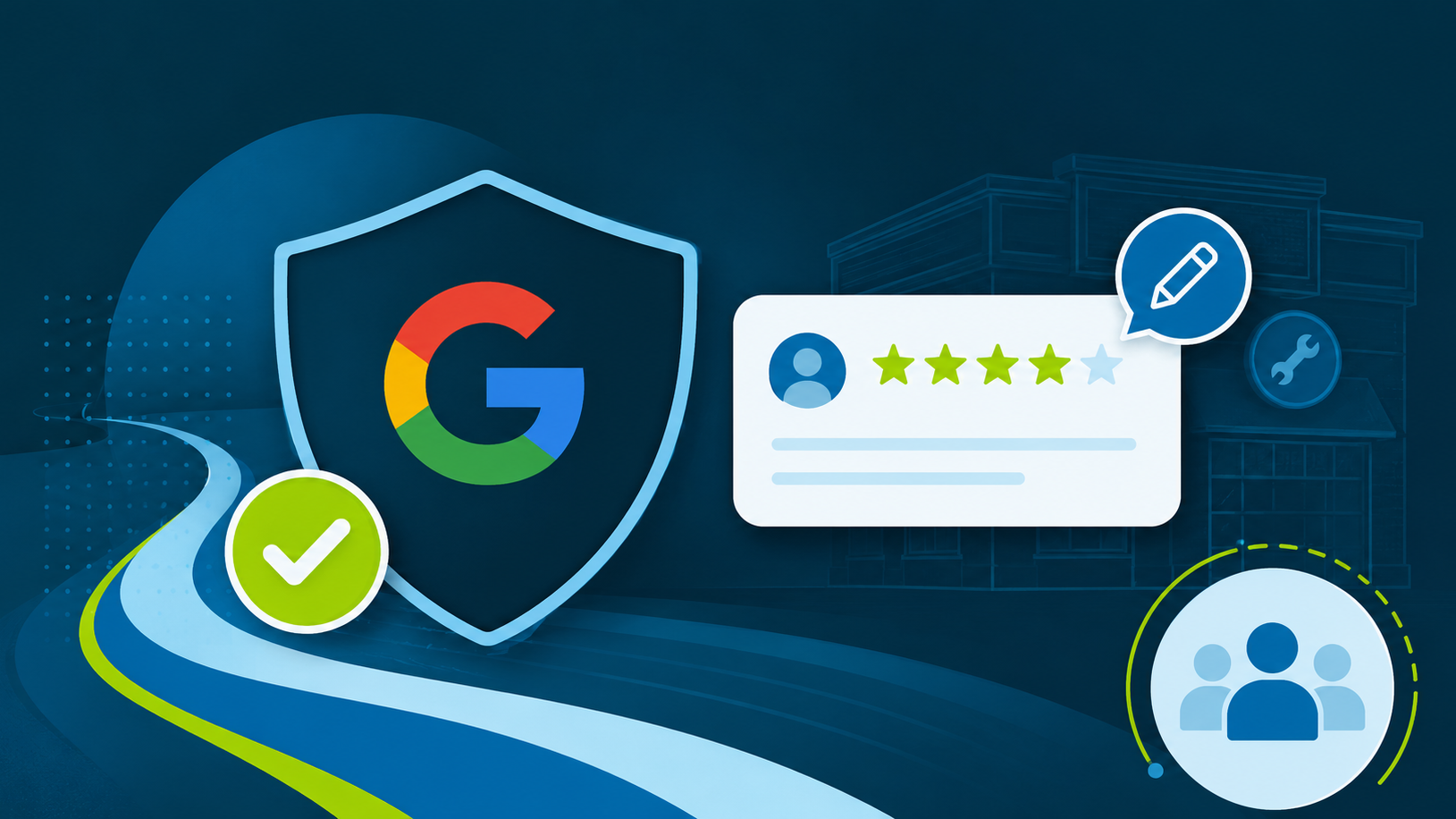
Google Reviews remain one of the most important sources of reviews for auto repair shops because they are directly connected to Google Search, Google Maps, and Google Business Profile, as we emphasized in the last blog. When customers leave detailed Google Reviews, they help Google understand your shop’s relevance for specific services, vehicle makes, locations, and customer needs.
This matters because a customer is not always searching for “auto repair shop.” They may be searching for a very specific need, such as their specific make or a specific service. The more your reviews naturally reflect those services and experiences, the easier it is for Google and AI-powered search tools to associate your shop with those searches.
Yelp Reviews Are Becoming AI Fuel, Too
Google is not the only platform using AI to summarize and recommend local businesses. Yelp has been investing heavily in AI-powered local discovery. Its newer Yelp Assistant is made to answer questions, make recommendations, and help users take action, such as booking appointments or connecting with local service businesses. Yelp has also introduced AI-powered Review Insights that analyze customer reviews to surface common themes and sentiment.
More importantly, Yelp data has also appeared in broader AI ecosystems; reporting from AP noted that Yelp had licensed some of its data to OpenAI for use in ChatGPT in February 2026.
That does not mean every Yelp review, forum thread, or third-party review automatically appears in every AI answer. But it does mean your shop’s reputation across the web can become part of the larger information ecosystem AI tools use to understand local businesses.
Reddit, Facebook Groups, and Community Mentions Matter
As we’ve covered in our other blog posts on AI search visibility, reviews do not only happen on traditional review platforms.
Auto repair recommendations often happen in community spaces, including:
- Reddit threads
- Facebook neighborhood groups
- Local community forums
- Car enthusiast forums
- Nextdoor discussions
- Local “best of” lists
- Specialty vehicle groups
For example, someone might ask in a local Facebook group:
- “Does anyone know a trustworthy mechanic in Portland who works on MINI Coopers?”
A past customer might reply:
- “KUKUI Auto Repair has worked on my MINI for years. They diagnosed an electrical issue the dealer missed and explained everything clearly.”
That type of mention can directly influence human customers. It may also help AI systems connect your shop with specific services, vehicle makes, and reputation themes if the content is publicly accessible or cited by search tools.
AI visibility is built from repeated signals. The more consistent those signals are across the web, the more confidently AI can understand what your shop is known for. It’s important to note that you can’t control or buy your way into a local community group. And you can’t force someone to recommend you on Reddit. So, what can a shop owner actually do about these spaces?
You focus on providing the exact kind of specific, remarkable service that forces people to talk about you. Because when local community members look for recommendations, they seek specific evidence.
What Makes a Review AI-Friendly
An AI-friendly review is not fake, forced, or stuffed with keywords. It is specific, honest, and written thoughtfully by the customer.
The best reviews often include details like:
- The service performed
- The vehicle make or model
- The problem the customer was trying to solve
- How the shop communicated
- Whether the repair was completed on time
- What made the experience different
- Whether the customer would return
An example includes:
- “We use KUKUI Auto Repair Shop for our small fleet of Ford Transit vans. They help us stay on top of oil changes, brake repairs, inspections, and unexpected issues so our vehicles stay on the road. Great communication and quick turnaround.”
This review helps connect the shop to fleet maintenance, Ford Transit service, preventative maintenance, brakes, inspections, communication, and turnaround time.
What Auto Repair Shops Should Encourage Customers to Mention
Shops should never tell customers exactly what to write. Reviews need to be authentic and based on real experiences. But you can encourage customers to be specific.
Instead of saying, “Please leave us a five-star review,” your team might say:
- “It helps other drivers know what to expect. Feel free to mention what service we helped you with and anything that stood out about your visit.”
Those details matter because AI tools look for meaning, not just ratings.
The Big Mistake: Chasing Stars Instead of Stories
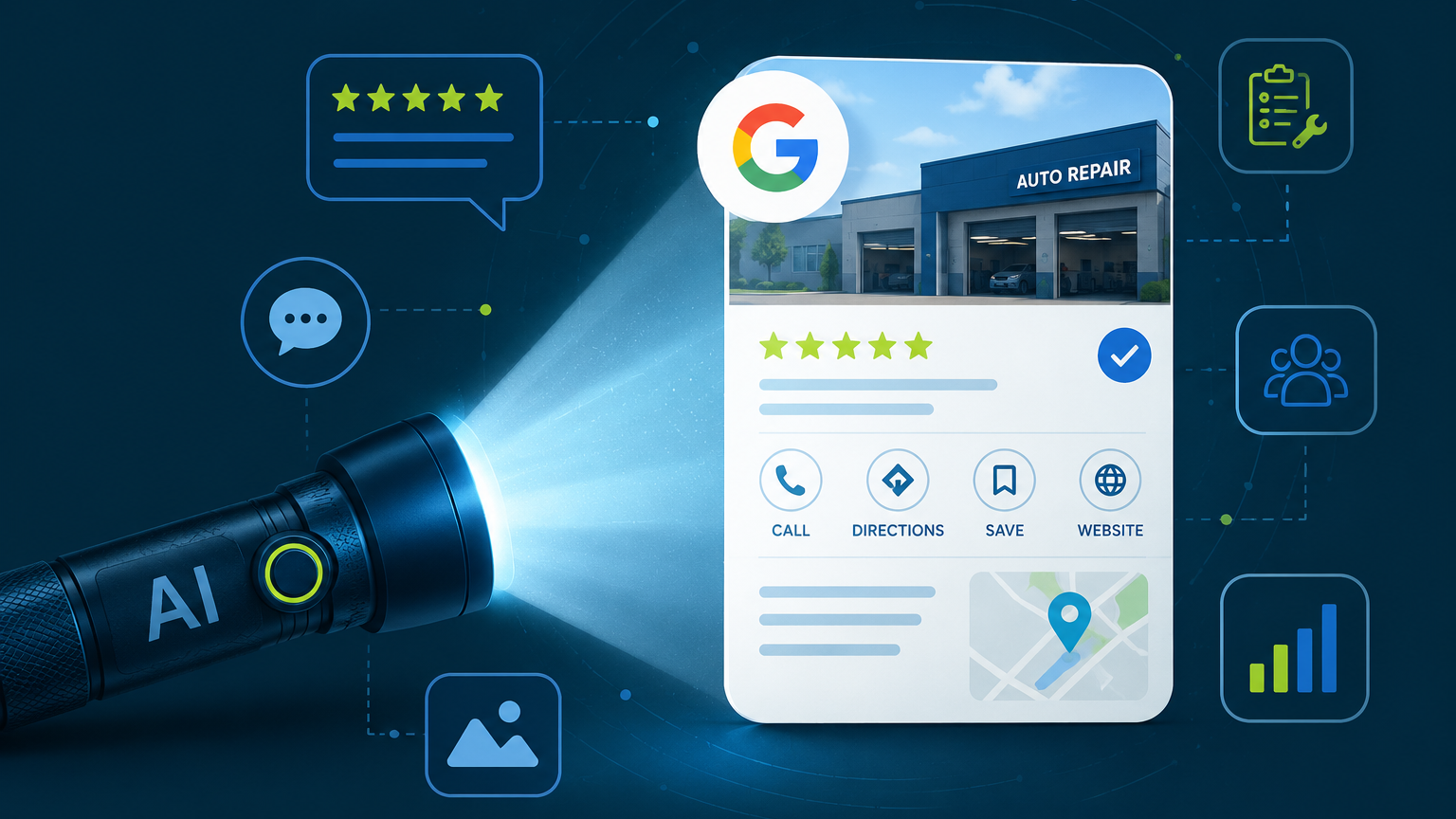
Many shops focus only on getting more five-star reviews. That is understandable, but it is incomplete. A strong star rating builds trust. A high review count builds credibility. But detailed written reviews build context. As mentioned in Blog 8 of the AI Is a Flashlight, Not a Map series, research shows the ideal average Google rating is between 4.2 and 4.5 stars. An overall perfect 5.0 can undermine trust because it looks too good to be true.
Context is what AI needs. If one shop has 300 reviews that mostly say “Great service,” and another shop has 150 reviews that repeatedly mention “fair pricing,” “brake service,” “clear communication,” and “same-day diagnostics,” the second shop may give AI more useful information to work with.
The goal is not just to collect reviews. The goal is to collect real customer stories that explain why someone chose your shop, what problem you solved, and what kind of experience they had.
Review Responses Can Strengthen the Signal
Your responses matter, too. When your shop replies to a review, you have another opportunity to naturally reinforce important context.
A shop response may look like this:
- “Thank you for trusting us with your brake repair. We’re glad our team could explain the work clearly and get you safely back on the road.”
That response reinforces “brake repair,” “explained clearly,” and “safely back on the road” without sounding unnatural.
Responses also show customers that your shop is active, attentive, and engaged. In local search, Google encourages businesses to respond to reviews and keep their information up to date.
The challenge is finding the time. Between managing the front counter, coordinating with techs, and keeping the bays moving, sitting down to craft personalized responses to every review rarely makes the priority list.
Strategies for Building a Steady Stream of Reviews
Getting high-quality reviews consistently takes more than good intentions. It requires a process. With the right message, shops can encourage customers to share honest reviews that reflect the services provided and their experience.
A few traditional ways to build a steady stream of reviews include:
- QR Codes: QR codes work well on printed materials that customers take with them, such as receipts, appointment cards, and invoices. Google's own documentation supports this as a compliant approach. What you want to avoid is collecting reviews while the customer is still in your shop.
- Postcards and Direct Mail: A well-timed card sent after a visit with a simple review request can reach customers who aren't on their phones.
- Text or Email Campaign: Sending a text or email a few days after a service keeps the request fresh. Including a direct, one-click link to your review profiles makes it incredibly easy for customers to share their feedback.
- Personal Phone Call: Make a quick courtesy call after an appointment is an excellent way to ensure satisfaction. If the customer is happy with their experience, it creates a perfect, natural opportunity to invite them to leave a review.
As AI becomes a bigger part of how drivers choose local car repair shops, your reviews become more than social proof. They become part of how your shop is understood online.
How KUKUI Helps Shops Maximize Review Visibility
To bridge the gap between knowing you need reviews and actually finding the time to manage them, KUKUI offers automated tools built specifically for busy auto repair shops.
- KUKUI's AI Review Responder (KAI): KAI analyzes the content and sentiment of each review and generates timely, personalized responses that feel genuine. You get the reputation benefit of responding to every review without pulling your team away from the work that keeps your shop running.
- KUKUI's Follow Up Module: This tool helps your service advisors connect with customers by phone at key moments after a visit, including thank-you calls, reminders for recommended services, and check-ins with customers who haven't been in for a while. These personal touchpoints build the kind of trust that naturally leads to reviews as well as referrals and repeat visits.
- KUKUI's Email and Texting Campaigns: Utilize KUKUI's Email and Text Marketing campaigns through KUKUI’s CP. You can seamlessly launch automated campaigns to ensure review requests are sent in a timely manner. The system automatically deploys service-related messaging as early as when a repair order is closed.
The Words in Your Reviews Matter
AI visibility is not just about ranking first. It is about being understood clearly enough to be recommended.
When customers describe your shop in detail, they help AI answer questions like:
- What services does this shop specialize in?
- What vehicles does this shop work on?
- Is this business trusted by real customers?
- What do people consistently praise about the experience?
- Is this shop a good match for the searcher’s specific need?
The more specific, authentic, and consistent your reviews are, the stronger your shop’s AI visibility can become.
So yes, keep asking satisfied customers for reviews. But more importantly, encourage them to tell the story of their visit. Because in the age of AI search, the contents of the review may be what helps your next customer find you.
SOURCES
https://support.google.com/business/answer/7091?hl=en
https://support.google.com/business/answer/3474050?hl=en
https://support.google.com/business/answer/10286840?hl=en
https://developers.google.com/maps/documentation/places/web-service/review-summaries
https://openai.com/policies/how-chatgpt-and-our-foundation-models-are-developed/
Categories
Archive
Recent Posts