In
Post 7
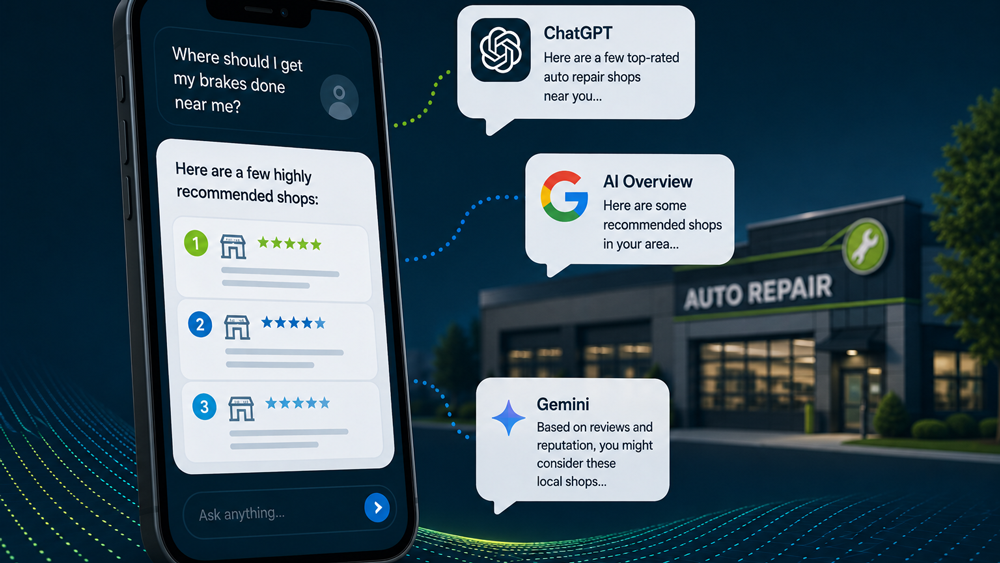
, we talked about how customers are starting to use AI to find repair shops. Google AI Overviews. ChatGPT. Gemini. Claude. The way people search is changing, and the businesses that show up in AI-powered results share a common set of traits.
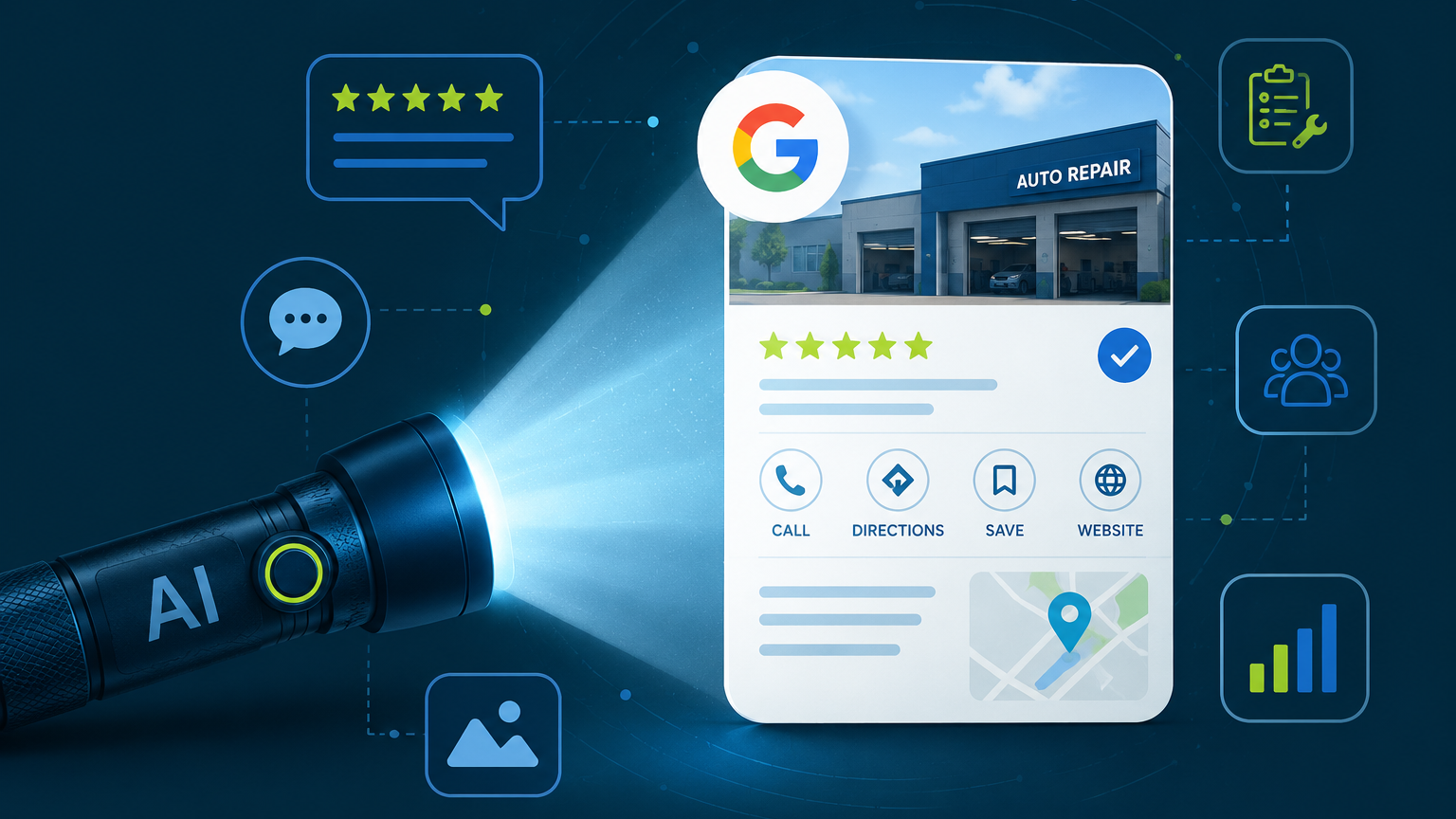
Your Google Business Profile (GBP) is at the center of almost all of it.
GBP has always been important for local search. But in 2026, it’s become something more: a primary data source for AI. When Google’s AI generates an overview, when Gemini recommends a business, when any AI tool tries to verify that your shop is real, credible, and relevant, your GBP is one of the first places it looks.
This post covers what’s changing about how AI interacts with your profile, and what you can do about it today.
AI Is Reading Your Reviews
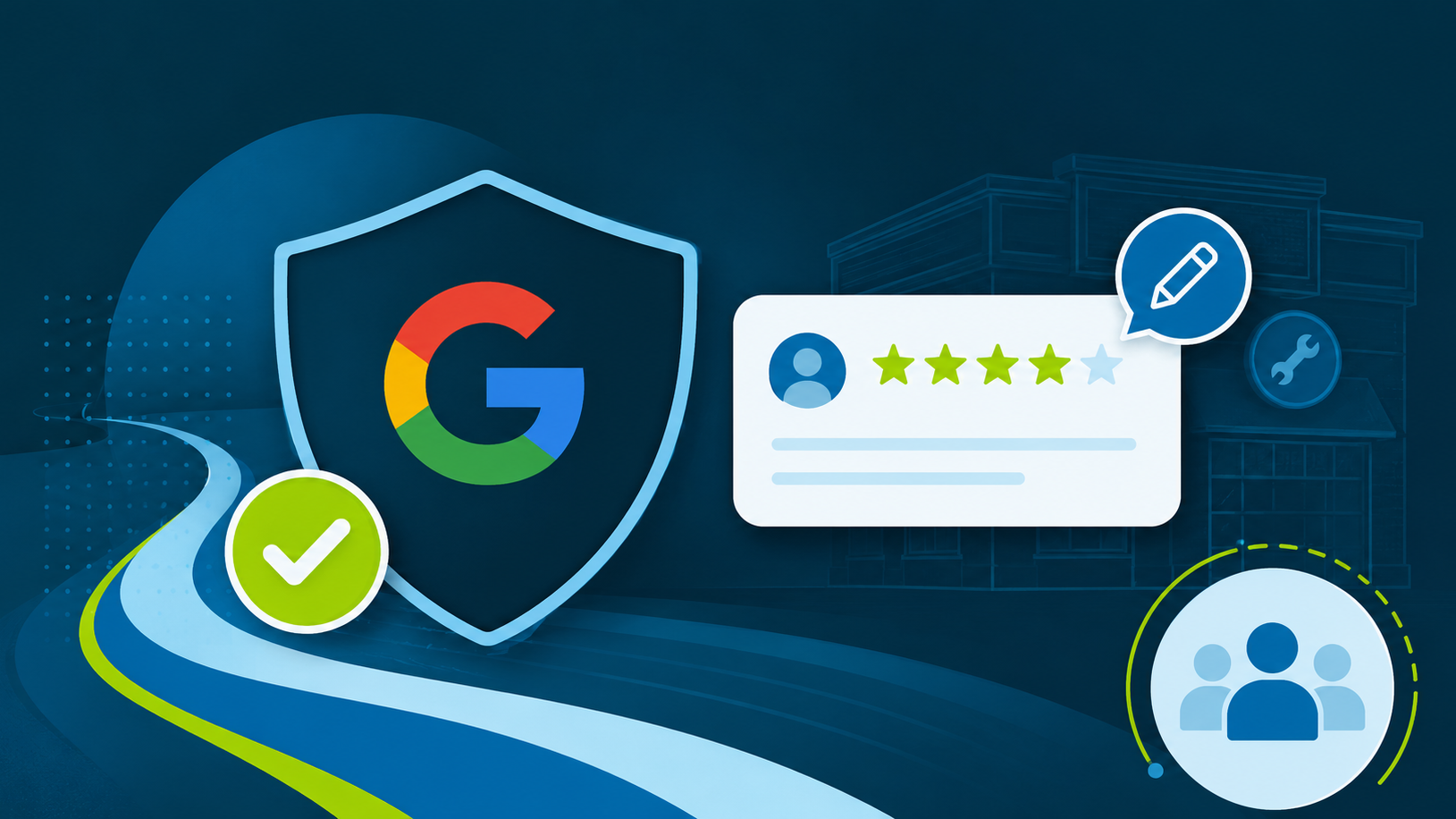
AI models don’t just look at your star rating. They read the actual text of your reviews. The language, the detail, the sentiment. A review that says “great place” and a review that says “they diagnosed a misfire my last shop couldn’t find, explained everything clearly, and had my car ready the same day” are very different signals to an AI model.
The detailed review gives AI something to work with: what your shop is good at, how your team communicates, and what kind of experience a customer can expect. That’s the information AI uses when it decides who to recommend. And it’s not just Google. Yelp, CarFax, RepairPal, Reddit, Facebook groups. AI pulls from all of it.
Responding to reviews matters too. AI models see your responses. Thoughtful, specific replies in a timely manner signal that your business is active and engaged. Google is even testing an AI-powered reply feature inside GBP right now. It’s a step in the right direction, but a general-purpose tool built for every type of business doesn’t understand how an auto repair shop talks to its customers. The tone, the language, the way you handle a five-star review vs. a frustrated customer. That’s industry-specific knowledge.
Shameless plug: this is exactly what we built. KUKUI’s AI Review Responder (https://www.kukui.com/ai-review-responder) was trained specifically for auto repair. It matches the tone of your shop, not a generic template. And it’s integrated into your workflow so you can review, adjust, and approve before anything posts.
We’re going deeper on this topic next week. How review content shapes AI visibility, what makes a review “AI-friendly,” and a critical policy change Google made in April that every shop owner needs to know about. Stay tuned.
Your Profile Is Your AI Resume
Think of your GBP as the resume AI reads before deciding whether to recommend you. Every section matters.
Categories and services.
Don’t just list “auto repair.” Use the detailed service descriptions to write clear, specific descriptions of what you do. “We specialize in brake diagnostics, engine performance, and fleet maintenance for domestic and Asian vehicles.” That’s information AI can use. “Full service auto repair” tells it nothing it doesn’t already assume.
Photos.
Google’s Vision AI now scans the photos on your profile to verify your business category, services, and location. High-quality, regularly updated photos are no longer optional. They’re a signal. Photos of your actual shop, your team, your work, your waiting area. Not stock images.
Products and services section.
This is one of the most underused sections on GBP. Most shops skip it or fill it out once and forget it. AI reads this section to understand exactly what you offer. Keep it current and specific.
Posts.
GBP posts are fresh data points. Each one tells AI that your business is active and current. Seasonal tips, service highlights, community involvement, special offers. Posting consistently signals that someone is paying attention. (Shameless plug:
KUKUI’s Social Toolkit
makes this manageable with twice-weekly posts not just on GBP, but across Facebook and Instagram too, keeping you consistently active without the extra full-time effort.)
Hours and business information.
Sounds basic, but inaccurate hours are one of the fastest ways to lose credibility with both AI and customers. If Google’s AI cross-references your hours with another source and finds a conflict, that’s a trust signal in the wrong direction.
Social Engagement: A New Ranking Factor
For the first time ever, social engagement has been recognized as a measurable local ranking factor. This comes from the Whitespark 2026 Local Search Ranking Factors report, which surveys the top local SEO practitioners in the industry.
This doesn’t mean you need to go viral on Instagram. It means that consistent, authentic social media activity sends signals that your business is real, active, and engaged with your community. AI models and search algorithms are now factoring this in.
For most shops, this means:
- Posting regularly on the platforms where your customers are (Facebook, Instagram, Google Business Profile).
- Engaging with comments and messages, not just broadcasting.
- Sharing real content from your shop, not generic automotive tips from a content library.
One More Thing We’re Watching
In our AI search testing, we’ve observed a pattern worth noting: shops running Local Service Ads (AKA Google Verified Ads) through their GBP appear to have a slight visibility advantage in AI Overviews compared to shops that don’t.
There’s no published research or industry confirmation that running Local Service Ads directly improves your chance of being recommended by AI. As running LSA’s require shops to go through a process and receive a Google Verified badge, which is then a trust signal AI can see (and now appears in some AI Overviews).
Or, what’s possibly happening is a correlation, not causation. Shops that run LSAs tend to also have:
• More reviews (LSA ranking depends on review quantity and rating).
• Better response times (LSA rewards fast answers).
• More active, complete GBP profiles.
So shops that do well on LSAs are also doing the things that independently help with AI visibility. We can’t say LSAs cause better AI visibility. But the shops running them tend to be the shops showing up. That’s worth noting.
What to Do This Week
You don’t need to overhaul your entire online presence. But there are things you can do right now that will make a difference:
- Respond to your recent reviews.
Start with the last ten. Make each response specific to what the customer said. If you’re a KUKUI client, use the AI Review Responder. If you’re not, use the prompts from
Post 3
or Google’s new feature.
- Update your GBP services section.
Make it specific. Write short, clear descriptions of what you actually do.
- Post something to your GBP this week.
A seasonal tip, a team photo, a service highlight. One post. That’s it.
- Check your hours and contact info.
Make sure they match your website and every directory you’re listed on.
- Upload a recent photo.
Something real from your shop. Not a stock image.
None of this takes more than thirty minutes. All of it feeds the AI signals that determine whether your shop gets recommended.
What’s Next
Reviews are so important to AI visibility that we’re dedicating two posts to them next week. First: how the content of your reviews shapes whether AI recommends your shop, and what makes a review “AI-friendly.” Then: a deep dive on review gating, a practice Google made major policy changes around in April 2026, and one that too many businesses are still getting wrong.
If you’re collecting reviews (or thinking about how to collect more of them), you’ll want to read both.
Catch up on the series:
Post 1
•
Post 2
•
Post 3
•
Post 4
•
Post 5
•
Post 6
•
Post 7
For the full framework:
The Shop Owner’s Guide to AI in Marketing
.
Heather Myers is the Chief Technology Officer at KUKUI, where she builds marketing and customer engagement technology for independent auto repair shops. Before joining the automotive technology space, she built information systems for public and academic libraries.
This is the eighth post in our ongoing series,
AI Is a Flashlight, Not a Map
. New posts publish every two weeks.